
IFH Center
- Medically Reviewed By: Dr. Vibha Kailash Garg, MS, FRCOG (London), Senior Consultant Obstetrician, Gynecologist & Reproductive Specialist
- Published By: Dr. Vibha IVF & Healthcare (International Fertility & Healthcare Centre)
- Location: Dr. Garg Tower, Sawai Ram Singh Road / Tonk Road, Jaipur, Rajasthan
- Last Updated: September 2026
TL;DR: Key Takeaways for Patients
- Prevalence: Male factors contribute to nearly half of all conception challenges, requiring targeted diagnostic semen testing rather than assuming fertility challenges are solely female-related.
- The Gold Standard Solution: Intracytoplasmic Sperm Injection (ICSI) provides the primary clinical solution for severe male factor cases by injecting a single healthy sperm directly into a mature egg.
- Overcoming Zero Sperm (Azoospermia): Outpatient surgical retrieval techniques like PESA and TESA can extract viable sperm directly from the testicles or epididymis, allowing biological parenthood without donor gametes in many obstructive cases.
- Treatment Pricing in Jaipur: Advanced ICSI treatment in Jaipur typically adds ₹15,000 to ₹30,000 to a standard procedural cycle to cover specialized micromanipulation lab consumables and embryologist expertise.
- Fertility Preservation: Patients undergoing surgical sperm collection or medical therapies can protect their future reproductive options through sperm freezing in Jaipur.
Quick Answer: How Does ICSI Treat Male Infertility in Jaipur?
Intracytoplasmic Sperm Injection (ICSI) treats male infertility by directly injecting a single, morphologically optimal sperm into a mature egg under high magnification. This laboratory technique bypasses natural fertilization barriers, making it the gold standard for severe oligospermia, poor motility, high DNA fragmentation, and surgical sperm retrievals.
This laboratory procedure overcomes issues like low sperm count (oligospermia), poor motility (asthenozoospermia), abnormal sperm shape (teratozoospermia), high DNA fragmentation, and past fertilization failure.
| Semen Analysis Finding | Clinical Definition | Recommended Treatment Pathway | Primary Laboratory Technique |
| Normozoospermia | Normal count, motility, and structure | Natural conception or routine IUI | Standard sperm washing |
| Mild Oligospermia | 10 to 15 million sperm per ml | IUI or conventional IVF | Density gradient centrifugation |
| Moderate fOligospermia | Less than 5 million sperm per ml | Advanced IVF with ICSI | High-magnification sperm selection |
| Asthenozoospermia | Less than 32% progressive motility | Targeted ICSI protocol | Motility tracking and micro-injection |
| Teratozoospermia | Less than 4% normal morphology | High-magnification ICSI | Morphological isolation under 400x zoom |
| Azoospermia | Zero sperm detected in the ejaculate | Surgical retrieval (PESA / TESA) | Microscopic search followed by ICSI |
Understanding Male Factor Infertility: Root Causes & Diagnostics
Male infertility contributes to nearly 50% of conception challenges and is primarily caused by varicoceles, high sperm DNA fragmentation (DFI), endocrine imbalances, and lifestyle oxidative stress. A comprehensive semen analysis and DFI test are required to identify whether medical therapy or advanced ART is indicated.
When evaluating couples seeking male infertility treatment in Jaipur, our clinical team conducts thorough diagnostic assessments to identify the underlying medical causes:
1. Varicocele (Enlarged Scrotal Veins)
A varicocele occurs when veins within the scrotum become abnormally dilated, raising testicular temperature and causing blood to pool. This elevated temperature impairs sperm production, reduces motility, and increases oxidative stress. Mild cases may respond to lifestyle changes and antioxidant supplements, while severe cases may benefit from surgical repair or direct progression to ICSI.
2. Sperm DNA Fragmentation Index (DFI)
Standard semen analyses measure sperm count, motility, and morphology, but they cannot assess genetic integrity. A Sperm DNA Fragmentation Index (DFI) evaluates the percentage of damaged or broken DNA strands within the sperm head. A DFI above 25% to 30% correlates with reduced fertilization rates, impaired blastocyst development, and recurrent early miscarriages.
3. Hormonal and Endocrine Disruptions
Sperm production depends on balanced signals between the pituitary gland and the testes. Low levels of Follicle-Stimulating Hormone (FSH), Luteinizing Hormone (LH), or testosterone can suppress spermatogenesis. Blood hormone evaluations help identify whether medical therapy can restore sperm production before proceeding to assisted reproduction.
4. Environmental and Lifestyle Factors
Excessive heat exposure from frequent hot baths, tight synthetic clothing, prolonged driving, or resting laptops directly on the lap can suppress sperm generation. Chronic tobacco use, heavy alcohol consumption, anabolic steroid use, and untreated metabolic conditions like diabetes also degrade semen parameters.
Step-by-Step ICSI Procedure: From Collection to Fertilization
The ICSI procedure consists of four specialized embryology phases: density gradient sperm washing, enzymatic oocyte denudation, 400x microscopic sperm selection, and direct micromanipulation injection. Fertilization occurs within hours, after which embryos are cultured in cleanroom incubators to the Day 5 blastocyst stage.
When you undergo the ICSI procedure in Jaipur, the laboratory team follows four precise micro-surgical stages:
Step 1: Semen Collection and Density Gradient Washing
The male partner provides a fresh semen sample on the day of the female partner’s egg retrieval. In the laboratory, the sample undergoes specialized density-gradient centrifugation. This separates healthy, motile sperm from seminal plasma, dead cells, bacteria, and debris, concentrating the highest-quality sperm in a clean culture medium.
Step 2: Oocyte Denudation (Egg Stripping)
While sperm is prepared, the embryologist evaluates the aspirated eggs. Retrieved eggs are surrounded by a cloud of protective cumulus cells. The embryologist uses an enzymatic solution to gently strip away these outer cells, allowing direct microscopic assessment of egg maturity. Only fully mature, Metaphase II (MII) oocytes can undergo ICSI.
Step 3: High-Power Microscopic Sperm Selection
Using an inverted microscope equipped with micromanipulators, the embryologist magnifies the prepared sperm sample up to 400 times. Individual sperm are assessed for head shape, neck symmetry, and tail movement. The embryologist immobilizes the selected sperm by touching its tail with a glass micropipette, which prepares it for injection.
Step 4: Direct Micro-Injection
The mature egg is held securely in place by gentle suction from a holding pipette. Using a microscopic injection needle that is roughly one-tenth the diameter of a human hair, the embryologist pierces the outer egg shell (zona pellucida) and cell membrane, releasing the single sperm into the center of the egg. The needle is withdrawn, and the fertilized egg is placed inside an incubator for culture.
Conventional IVF vs. ICSI: Which Treatment Do You Need?
While conventional IVF places 50,000+ sperm in a culture dish to fertilize an egg naturally, ICSI requires only one healthy sperm micro-injected directly into the egg cytoplasm. ICSI is medically indicated for severe male factor issues, previous fertilization failures, and surgically retrieved sperm.
Understanding this distinction helps couples make informed decisions alongside an experienced infertility specialist in Jaipur:
| Feature / Metric | Conventional In Vitro Fertilization (IVF) | Intracytoplasmic Sperm Injection (ICSI) |
| Fertilization Method | Natural penetration in a culture dish | Direct mechanical micro-injection |
| Sperm Required | 50,000 to 100,000 motile sperm per egg | Exactly 1 viable sperm per mature egg |
| Primary Indication | Fallopian tube blockage, mild endometriosis | Severe low count, poor motility, high DFI, azoospermia |
| Laboratory Equipment | Standard laminar airflow and dish culture | Inverted microscope and micromanipulator controls |
| Average Cost in Jaipur | Included in standard procedural package | Procedural package plus ₹15,000 to ₹30,000 add-on |
| Fertilization Rate | 60% to 70% in normal semen profiles | 70% to 85% of injected mature oocytes |
For a broader look at cycle pricing, read our detailed guide on IVF cost in Jaipur.
Surgical Sperm Retrieval (PESA, TESA & Micro-TESE) for Azoospermia
A diagnosis of azoospermia (zero sperm in the ejaculate) can often be treated using minimally invasive surgical retrieval techniques like PESA, TESA, or Micro-TESE. These outpatient procedures extract viable sperm directly from the epididymis or testicular tubules for immediate ICSI or cryopreservation.
A diagnosis of azoospermia does not mean a couple must automatically turn to donor sperm. In many cases, the testicles continue producing healthy sperm that cannot exit due to physical blockages or transport issues. Our center provides gentle, outpatient surgical sperm retrieval procedures performed under local anesthesia:
- Percutaneous Epididymal Sperm Aspiration (PESA): A non-incisional procedure for obstructive azoospermia, such as following a prior vasectomy or congenital absence of the vas deferens. A fine needle aspirates fluid containing viable sperm directly from the epididymis.
- Testicular Sperm Aspiration (TESA): When epididymal collection is unsuitable, a fine needle collects small tissue cores directly from the testicle under local numbing, yielding viable sperm for immediate fertilization or cryopreservation.
- Microscopic Testicular Sperm Extraction (Micro-TESE): In non-obstructive azoospermia where sperm production is very low, an operating microscope helps the surgeon identify and extract small, actively producing seminiferous tubules while preserving surrounding tissue.
- Sperm Freezing: Once viable sperm is identified from surgical retrieval, the sample can undergo sperm freezing in Jaipur to ensure backup samples are available for future transfers without repeating the procedure.
ICSI Treatment Cost in Jaipur: Inclusions & Laboratory Add-Ons
The standalone ICSI add-on fee in Jaipur ranges from ₹15,000 to ₹30,000 over standard IVF hospital fees. A complete IVF cycle with ICSI (including ovarian stimulation injections, ultrasound monitoring, surgical retrieval, and embryo transfer) typically averages ₹1,65,000 to ₹2,80,000.
Because ICSI requires specialized micromanipulation workstations, micro-tools, and experienced embryologists, clinics bill this procedure alongside base hospital fees. Understanding your total financial commitment helps ensure transparent planning:
| Treatment Component | Estimated Cost Range (Jaipur) | What the Expense Covers |
| Diagnostic Semen Analysis & Culture | ₹800 to ₹1,500 | Detailed evaluation of count, motility, and vitality |
| Sperm DNA Fragmentation Index (DFI) | ₹3,500 to ₹6,000 | Advanced molecular assessment of genetic integrity |
| ICSI Laboratory Micromanipulation | ₹15,000 to ₹30,000 | Micromanipulator use, micro-needles, and embryologist fee |
| TESA / PESA Surgical Retrieval | ₹30,000 to ₹50,000 | Day-care sperm retrieval, local anesthesia, and surgical fees; may be included in the complete IVF + ICSI package depending on the treatment plan |
| Sperm Vitrification & 1-Year Storage | ₹10,000 to ₹20,000 | Liquid nitrogen storage for surgically collected sperm |
| Complete IVF with ICSI Cycle | ₹1,65,000 to ₹2,80,000 | Full cycle, including stimulation medications and ICSI |
For couples seeking affordable IVF treatment in Jaipur, our clinic provides transparent, written estimates and zero-percent interest EMI payment options to distribute expenses comfortably across 6 to 12 months.
Practical Ways to Improve Sperm Health Before an ICSI Cycle
As spermatogenesis takes 72 to 90 days, sperm parameters can be improved prior to ICSI through daily antioxidant therapy (CoQ10, Zinc, Lycopene), avoiding scrotal heat exposure, smoking cessation, and maintaining a regular 2 to 3-day ejaculation frequency to minimize DNA fragmentation.
Sperm development takes approximately three months. Positive lifestyle adjustments and targeted medical support during this window can measurably improve sperm count, motility, and DNA fragmentation before beginning treatment:
- Targeted Antioxidant Supplementation: Daily supplementation with Coenzyme Q10, L-Carnitine, Zinc, Vitamin C, Vitamin E, and Lycopene helps neutralize reactive oxygen species (ROS) in seminal fluid, protecting sperm membranes and reducing DNA fragmentation.
- Avoid Elevated Testicular Temperatures: Steer clear of hot tubs, steam rooms, saunas, and prolonged sitting with a warm laptop resting directly on the lap. Wear loose, breathable cotton underwear to support natural scrotal cooling.
- Limit Toxins and Nicotine: Smoking tobacco and using e-cigarettes expose sperm to heavy metals and mutagenic chemicals that degrade sperm structure. Reducing alcohol consumption also helps support normal testosterone levels.
- Maintain Regular Ejaculation Intervals: Avoid prolonged periods of abstinence, as longer abstinence may affect sperm motility and DNA integrity in some men. A 2 to 3-day interval is commonly recommended when preparing a semen sample for fertility treatment, although the ideal interval can vary based on individual semen parameters and your fertility specialist’s advice.
How to Choose the Right ICSI Specialist & Embryology Lab in Jaipur
Selecting an ICSI center requires evaluating embryologist micromanipulation skill, Class 10,000 cleanroom air filtration, in-house andrology and freezing facilities, and doctor-led consultations. High laboratory air purity directly influences fertilization rates and blastocyst formation.
The technical success of ICSI depends directly on embryology lab standards and the skill of the microtechnician. Because eggs are delicate living cells, choosing an experienced clinic protects both fertilization rates and embryo development:
- Embryologist Experience: Ask about the embryologist’s experience with ICSI and micromanipulation. An experienced embryology team can help minimize oocyte damage during injection while supporting good fertilization outcomes, with ICSI fertilization rates commonly reported in the 70% to 85% range for mature injected oocytes.
- Cleanroom Laboratory Air Quality: Embryos develop best in cleanroom environments with positive pressure, HEPA filtration, and VOC carbon filters. Protecting gametes from airborne impurities supports healthy progression to the blastocyst stage.
- In-House Andrology Facilities: Centers that maintain in-house surgical sperm retrieval and cryopreservation provide smooth coordination between male sperm collection and female egg retrieval on the same morning.
- Doctor-Led Consultations: Ensure you can discuss diagnostic reports directly with an experienced ICSI specialist in Jaipur who takes time to explain individual outcomes rather than delegating consultations to rotating clinical staff.
Frequently Asked Questions
What is the difference between IVF and ICSI?
Conventional IVF places an egg in a laboratory dish surrounded by thousands of washed sperm, allowing fertilization to occur naturally. In contrast, ICSI involves an embryologist using a micromanipulator to inject a single, healthy sperm directly into the egg, which helps overcome low sperm count, reduced motility, and fertilization failure.
What is the average ICSI cost in Jaipur?
The ICSI procedure itself typically adds ₹15,000 to ₹30,000 to a standard IVF package in Jaipur. A complete IVF cycle with ICSI, including stimulation medications, ultrasound monitoring, egg retrieval, and embryo transfer, generally ranges from ₹1,65,000 to ₹2,80,000 based on individual clinical needs.
Can ICSI cure severe low sperm count (oligospermia)?
Yes, ICSI is the primary clinical treatment for severe oligospermia. Because the embryologist needs only one healthy, viable sperm for each retrieved egg, men with very low counts can achieve fertilization rates comparable to normal semen profiles without requiring donor sperm.
Is ICSI painful for the male partner?
Standard semen collection through ejaculation involves no discomfort. If surgical sperm retrieval (such as PESA or TESA) is needed for azoospermia, the procedure is performed under local anesthesia or light conscious sedation, ensuring the patient feels minimal discomfort during collection. Mild aching afterward is easily managed with routine pain relievers.
Can ICSI help if the male partner has zero sperm (azoospermia)?
Yes, if the condition is obstructive azoospermia where the testicles produce sperm that cannot travel out, techniques like PESA or TESA can retrieve sperm directly from the epididymis or testicular tubules. These retrieved sperm can then be used immediately for ICSI fertilization.
Does ICSI increase the risk of birth defects?
Extensive long-term clinical data shows the risk of major birth defects following ICSI is very low (around 3% to 4%), which is close to the rate seen in natural conceptions. When slight increases occur, they generally relate to underlying parental genetic factors rather than the micromanipulation procedure itself.
How long does the ICSI laboratory procedure take?
The micro-injection of a cohort of retrieved eggs typically takes 20 to 45 minutes, depending on the number of mature oocytes available. The embryologist carefully holds, positions, and micro-injects each egg individually before returning them to incubators for culture.
What is the success rate of ICSI treatment in Jaipur?
Fertilization rates with ICSI range between 70% and 85% of mature, injected eggs. Overall pregnancy success depends heavily on female maternal age, egg quality, and uterine receptivity, with clinical pregnancy rates per transfer sitting between 45% and 55% for women under 35.
Is sperm freezing recommended before an ICSI cycle?
Yes, sperm freezing is often recommended as a precautionary measure. Freezing a backup sample ensures healthy sperm is available on egg retrieval day even if the male partner faces travel delays, illness, or stress-related difficulty producing a fresh sample.
Does health insurance cover ICSI treatment in India?
Most standard health insurance policies in India classify assisted reproductive techniques as elective and exclude them from base plans. However, select corporate group health policies and specialized fertility insurance riders offer partial reimbursement benefits up to defined sub-limits.
Consult Dr. Vibha IVF & Healthcare for Male Fertility Care
Addressing male factor fertility concerns starts with transparent guidance, thorough diagnostic testing, and advanced laboratory support. At Dr. Vibha IVF & Healthcare, our clinical team helps couples navigate fertility planning with personalized care and clinical clarity.
- Specialist Consultation: Meet with Dr. Vibha Kailash Garg (MS, FRCOG London) for a comprehensive review of your semen analysis, medical history, and customized treatment recommendations.
- Central Jaipur Clinic: Conveniently located at Dr. Garg Tower, Sawai Ram Singh Road / Tonk Road, Jaipur, near Narayan Singh Circle, SMS Hospital, and major transit routes.
- Clear Financial Guidance: Receive an itemized treatment estimate detailing procedural steps, laboratory costs, and available zero-percent interest EMI payment options before starting your cycle.
Connect with our care team: Visit our clinic or schedule a consultation through drvibhaivf.com to take the next step in your treatment journey.
This is for informational purposes only. For medical advice or diagnosis, consult a professional.
- Medically Reviewed By: Dr. Vibha Kailash Garg, MS, FRCOG (London), Senior Consultant Obstetrician, Gynecologist & Reproductive Specialist
- Published By: Dr. Vibha IVF & Healthcare (International Fertility & Healthcare Centre)
- Location: Dr. Garg Tower, Sawai Ram Singh Road / Tonk Road, Jaipur, Rajasthan
- Last Updated: September 2026
TL;DR: Key Takeaways for Patients
- High Success Rates: Because eggs are provided by young, medically screened donors, donor egg cycles offer clinical pregnancy rates of 60% to 75% per transfer, making it an effective option for women with low ovarian reserve or repeated IVF failures.
- Strict Legal Compliance: Under India’s Assisted Reproductive Technology (Regulation) Act, 2021, all egg donors must be married women aged 23 to 35 with at least one living child of their own aged three or older. A donor can donate only once in her lifetime, and complete anonymity is required by law.
- Mandatory Donor Insurance: Commissioning parents are legally required to purchase a dedicated 12-month health insurance policy in favor of the oocyte donor to cover any donation-related medical risks.
- Realistic Pricing in Jaipur: The average egg donation IVF cost in Jaipur ranges from ₹3,00,000 to ₹4,25,000, which includes ART bank screening fees, donor stimulation medications, retrieval, recipient uterine preparation, ICSI fertilization, and embryo transfer.
- Fertility Preservation: Patients undergoing fertility treatments, delayed childbearing, or oncology therapies can protect their future reproductive options through advanced embryo freezing in Jaipur and sperm freezing in Jaipur.
Quick Answer: What Is Donor Egg IVF and How Does It Work?
Donor egg IVF is an assisted reproductive procedure where healthy eggs retrieved from an anonymously screened donor are fertilized in an embryology laboratory with the recipient partner’s sperm. The resulting embryo is cultured to the Day 5 blastocyst stage and transferred into the recipient mother’s prepared uterus.
This treatment bypasses ovarian barriers such as premature menopause, age-related egg depletion, or genetic risks, allowing the intended mother to carry and give birth to her baby.
| Clinical Parameter | Traditional Self-Egg IVF | Donor Egg IVF Cycle |
| Egg Source | Biological mother’s ovaries | Screened, healthy anonymous donor (aged 23 to 35) |
| Sperm Source | Intended father (or donor sperm) | Intended father (or donor sperm) |
| Ovarian Stimulation | Female partner receives 10 to 12 days of hormone shots | Donor receives stimulation injections; recipient takes oral estrogen |
| Primary Indication | Tubal blockages, mild male factor, ovulatory issues | Low AMH, premature ovarian failure, repeated poor egg quality |
| Average Cost in Jaipur | ₹1,50,000 to ₹2,50,000 | ₹3,00,000 to ₹4,25,000 |
| Average Clinical Success | 40% to 50% (dependent on maternal age) | 60% to 75% per transfer (based on young donor egg quality) |
| Legal Framework | Standard medical consent | Regulated under Indian ART Act 2021 with mandatory donor insurance |
Who Needs Donor Egg IVF in Jaipur? Clinical Indications
Donor egg IVF is medically recommended when a woman cannot produce viable eggs due to diminished ovarian reserve, premature ovarian failure, advanced maternal age, surgical ovary removal, or hereditary genetic risks. It is also advised after multiple failed IVF cycles caused by poor egg or embryo quality.
When couples visit our center for advanced reproductive care, our specialists evaluate whether using donor oocytes is the most effective clinical path forward:
1. Diminished Ovarian Reserve and Premature Ovarian Insufficiency (POI)
When a woman’s Anti-Müllerian Hormone (AMH) drops below 0.5 ng/ml or her Antral Follicle Count shows minimal resting eggs, stimulating her ovaries often yields very few or poor-quality eggs. In cases of premature ovarian failure, where periods stop before age 40, donor eggs offer a dependable path to pregnancy.
2. Advanced Maternal Age (Age 38 and Above)
As women age, both the quantity and chromosomal quality of their eggs naturally decline. By age 40, over 70% of retrieved eggs may carry chromosomal abnormalities, leading to failed fertilization or recurrent miscarriages Using eggs from a younger donor substantially reduces the age-related chromosomal risks associated with the oocyte, although it does not eliminate all genetic or pregnancy-related risks.
3. Repeated IVF Failures Linked to Embryo Quality
Some couples undergo multiple standard cycles of IVF treatment in Jaipur with poor results, producing fragile embryos that arrest before reaching the blastocyst stage. When diagnostic assessments confirm poor oocyte quality as the primary cause, shifting to donor eggs often resolves the issue.
4. Genetic Conditions and Medical History
Women who carry balanced chromosomal translocations, severe X-linked disorders, or those who have had their ovaries removed surgically or damaged by chemotherapy or radiation therapy require donor eggs to achieve a safe, healthy pregnancy.
Couples exploring preliminary health assessments can also schedule a comprehensive gynecological evaluation to review ovarian health, pelvic circulation, and concurrent metabolic conditions like the management of hormonal hair loss and related concerns.
India’s ART Regulation Act 2021: Legal Guidelines and Donor Protection
The Assisted Reproductive Technology (Regulation) Act, 2021, mandates that all egg donors in India must be married women aged 23 to 35 with a living child of their own who is at least three years old. Donors may donate only once in their lifetime, complete anonymity is strictly maintained, and the commissioning parents must provide 12 months of health insurance coverage for the donor.
The Indian ART Act provides a clear legal framework that protects intended parents, egg donors, and children born through assisted reproduction. When starting a donor cycle in Rajasthan, your clinic must follow these specific legal provisions:
- Eligibility of Commissioning Parents: To access donor egg services, the commissioning woman must be between 21 and 50 years of age, and the male partner must be between 21 and 55 years of age. Single women (unmarried, divorced, or widowed) who are Indian citizens aged 21 to 50 are also legally permitted to access ART treatments.
- Registered ART Gamete Banks: Fertility clinics are strictly prohibited from recruiting donors directly or providing cash payments outside regulatory standards. All donors must be sourced through government-registered ART banks that verify identity, legal eligibility, and medical history.
- Maximum Oocyte Retrieval: The law stipulates that no more than seven mature eggs may be retrieved from an oocyte donor during her single permitted donation cycle.
- Exclusivity of Gametes: A single donor’s retrieved eggs cannot be split or shared among multiple commissioning couples. All viable eggs retrieved during that cycle belong exclusively to the single commissioning party.
- Legal Rights of the Child: Under Indian law, any child born through donor egg IVF is legally recognized as the legitimate, biological child of the commissioning parents. The egg donor holds zero legal, parental, or financial rights or responsibilities over the child.
| Legal Provision / Safeguard | Statutory Rule (ART Act 2021) | Clinical & Legal Impact on Patients |
| Donor Age & Marital Status | Oocyte donors must be married women aged 23 to 35 years with at least one living biological child who is at least three years of age. | Ensures the donor has proven biological fertility, emotional maturity, and completed her own family planning before donating. |
| Lifetime Donation Limit | A woman is legally permitted to donate oocytes only once in her entire lifetime. | Protects donor health from repetitive ovarian hyperstimulation and prevents widespread distribution of related genetic lines. |
| Oocyte Retrieval Cap | An embryologist may retrieve no more than seven mature eggs from a donor during her single permitted donation cycle. | Prevents aggressive overstimulation protocols, prioritizing donor physiological safety while ensuring viable oocytes for the recipient. |
| Gamete Exclusivity | All eggs retrieved from a donor cycle belong exclusively to a single commissioning couple; gamete splitting is prohibited. | Eliminates batch sharing between multiple families, ensuring clear lineage and focused embryo creation for the intended parents. |
| Mandatory Donor Insurance | Commissioning parents must purchase an approved 12-month health insurance policy in favor of the donor. | Provides financial and medical coverage for the donor in the event of any unforeseen post-retrieval complications or hospitalizations. |
| Strict Legal Anonymity | The identity of the donor and the commissioning parents must remain completely confidential; no photographs or meetings are permitted. | Protects personal privacy for both sides and prevents future contact, solicitation, or emotional conflict. |
| Parental Rights of the Child | The child born through ART is legally recognized from birth as the legitimate child of the commissioning parents; the donor holds zero parental rights. | Legally shields the intended parents from custody disputes, ensuring full parental rights, inheritance rights, and birth certificate registration. |
| Registered ART Banks Only | Clinics are strictly forbidden from sourcing donors directly; all donors must be matched through licensed, registered ART gamete banks. | Guarantees rigorous pre-donation screening for genetic conditions, infectious diseases (HIV, Hepatitis B/C, VDRL), and medical history. |
| Commissioning Parent Age Limits | The commissioning female partner must be between 21 and 50 years of age, and the male partner between 21 and 55 years of age. | Establishes legal eligibility criteria across India to safeguard parental health and welfare for the child. |
Egg Donation IVF Cost in Jaipur: Inclusions and Package Details
The comprehensive egg donation IVF cost in Jaipur typically ranges from ₹3,00,000 to ₹4,25,000. This fee covers ART bank donor matching, mandatory 12-month donor insurance, donor ovarian stimulation medications, egg retrieval, recipient uterine preparation, ICSI fertilization, and embryo transfer.
Because donor cycles involve coordinating two individuals alongside regulated ART gamete banks, treatment quotes combine clinical hospital procedures with regulatory bank services.
| Cost Component | Indicative Cost Range (Jaipur) | What the Expense Covers |
| ART Bank Sourcing & Matching | ₹70,000 to ₹1,10,000 | Donor background checks, viral screenings, and non-identifying profiles |
| Mandatory Donor Health Insurance | ₹5,000 to ₹12,000 | 12-month health policy protecting the donor against complications |
| Donor Stimulation Medications | ₹50,000 to ₹80,000 | Gonadotropin injections, trigger shots, and monitoring scans for the donor |
| Donor Ovum Pickup (Egg Retrieval) | ₹45,000 to ₹65,000 | Day-care operating theater fees, sedation, and embryology lab aspiration |
| Laboratory ICSI Fertilization | ₹20,000 to ₹35,000 | High-power micro-injection of recipient sperm into donor oocytes |
| Recipient Uterine Preparation | ₹15,000 to ₹25,000 | Oral estrogens, progesterone support, and ultrasound lining thickness checks |
| Embryo Transfer (Fresh or FET) | ₹35,000 to ₹50,000 | Catheter transfer of selected blastocyst into the recipient uterus |
| Surplus Embryo Vitrification (1 Year) | ₹30,000 to ₹50,000 | Cryopreservation and storage of extra high-grade blastocysts |
For a broader review of standard procedural fees, read our complete guide on IVF cofst in Jaipur.
Fertility Preservation in Jaipur: Egg, Sperm, and Embryo Freezing
Fertility preservation in Jaipur uses vitrification, an ultra-rapid flash-freezing technology that cools reproductive cells to -196°C in liquid nitrogen without ice crystal formation. This allows individuals and couples to safely freeze mature eggs, sperm samples, or Day 5 blastocysts for years with post-thaw survival rates exceeding 90%.
Modern cryobiology allows patients to preserve their reproductive options for medical, personal, or clinical reasons. At our center, we provide comprehensive options for fertility preservation in Jaipur:
Here is the “Fertility Preservation Options” infographic converted into a clean, copy-pasteable Markdown table:
| Preservation Option | Biological Material Preserved | Primary Clinical & Personal Indications | Laboratory Process & Storage | Typical Cost Range (Jaipur) |
| Egg Freezing (Oocyte Cryopreservation) | Mature, unfertilized oocytes (Metaphase II stage) | Women wishing to delay childbearing for personal, educational, or career milestones; women with early signs of declining ovarian reserve. | 10 to 12 days of hormone stimulation, transvaginal retrieval under sedation, and rapid flash vitrification in liquid nitrogen at -196°C. | ₹1,20,000 to ₹1,80,000 (includes stimulation medications and the first year of storage) |
| Sperm Freezing (Semen Cryopreservation) | Motile, viable spermatozoa (from ejaculate or surgical retrieval) | Men facing declining sperm counts, prior to vasectomy, or providing a backup sample on the day of egg retrieval to avoid performance anxiety or travel delays. | Diagnostic semen analysis, density gradient washing to isolate healthy motile sperm, cryoprotectant addition, and vitrification. | ₹8,000 to ₹15,000 (includes preliminary infectious screening, preparation, and 1 year of storage) |
| Embryo Freezing (Blastocyst Vitrification) | Fertilized Day 5 or Day 6 blastocyst embryos | Preserving surplus healthy embryos from an IVF or ICSI cycle; executing Freeze-All safety protocols for PCOS to avoid OHSS; planning future siblings. | Culturing embryos to the 100-cell blastocyst stage, cellular grading, ultra-rapid vitrification preventing ice crystal formation, and nitrogen tank storage. | ₹30,000 to ₹60,000 for initial vitrification; annual maintenance and storage renewals average ₹10,000 to ₹20,000 |
| Medical & Onco-Fertility Preservation | Oocytes, sperm, or embryos | Individuals diagnosed with cancer or severe autoimmune conditions prior to gonadotoxic chemotherapy, pelvic radiation, or surgical ovary removal. | Urgent, rapid-start stimulation protocols initiated immediately without waiting for a new menstrual cycle, coordinated closely with the patient’s oncologist. | Varies by chosen modality (sperm, egg, or embryo freezing protocols) |
1. Embryo Freezing in Jaipur
Couples undergoing IVF frequently produce more healthy blastocysts than can be safely transferred in a single attempt. Opting for embryo freezing in Jaipur allows extra high-grade embryos to be preserved. If a fresh cycle is unsuccessful, or when couples wish to plan a second child years later, a Frozen Embryo Transfer (FET) can be performed without undergoing another stimulation or egg retrieval cycle. Initial vitrification fees range between ₹30,000 and ₹60,000, with annual storage renewal fees averaging ₹10,000 to ₹20,000.
2. Sperm Freezing in Jaipur
Semen cryopreservation provides a reliable solution for men facing fluctuating sperm counts, upcoming medical treatments, or demanding travel schedules. Utilizing sperm freezing in Jaipur ensures that high-quality, viable sperm is stored in liquid nitrogen and available on the day of egg retrieval. Cryopreservation fees range from ₹8,000 to ₹15,000, which includes initial testing, washing, freezing, and the first year of tank storage.
3. Social and Medical Egg Freezing
Women who wish to preserve their reproductive potential while pursuing education or career milestones, or those facing cancer therapies that threaten ovarian function, can stimulate and freeze their unfertilized eggs. Freezing oocytes before age 35 locks in the biological quality of those eggs for future IVF use.
The Step-by-Step Donor Egg IVF Treatment Timeline
A donor egg IVF cycle requires roughly four to six weeks from donor matching to embryo transfer. The process involves non-identifying donor selection, synchronizing cycles or preparing the recipient uterus with estrogen, retrieving donor eggs, fertilizing them via ICSI, and transferring a Day 5 blastocyst.
When beginning a cycle with our clinical team, your treatment follows five clear phases:
Here is the clean, copy-pasteable Markdown table detailing all five phases of a donor egg IVF cycle:
| Phase | Clinical Stage | Timeline | Key Medical & Laboratory Procedures |
| Phase 1 | Donor Matching & Legal Screening | Weeks 1 to 2 | Selecting a non-identifying profile from a registered ART bank, completing viral and genetic screenings, purchasing the mandatory 12-month donor health insurance, and signing statutory informed consents. |
| Phase 2 | Recipient Endometrial Preparation | Weeks 2 to 4 | The recipient takes oral estrogen tablets to build a receptive uterine lining, monitored by 2 to 3 transvaginal ultrasound scans until the endometrium reaches 8 to 11 mm. |
| Phase 3 | Donor Retrieval & Semen Collection | Week 4 (Cycle Day 14) | The donor completes ovarian stimulation and undergoes sedated transvaginal egg retrieval, while the recipient partner provides a fresh semen sample for density-gradient processing. |
| Phase 4 | ICSI Fertilization & Blastocyst Culture | Days 15 to 19 | Embryologists fertilize mature donor eggs via high-magnification ICSI, culture developing embryos for 5 days to the blastocyst stage, grade cellular quality, and vitrify surplus embryos. |
| Phase 5 | Embryo Transfer & Two-Week Wait | Days 19 to 21 (plus 14 days) | Progesterone support prepares the uterine lining for implantation, followed by ultrasound-guided catheter transfer of a selected blastocyst and a beta-hCG blood test 14 days later. |
Phase 1: Donor Selection and ART Bank Matching
Commissioning parents select an eligible donor through a registered ART bank. Parents review non-identifying physical and medical profiles, including blood group, height, skin tone, eye color, educational background, and family medical history. Strict legal anonymity is maintained throughout the process.
Phase 2: Recipient Uterine Endometrial Preparation
While the donor prepares for stimulation, the recipient mother begins taking oral estrogen tablets starting on Day 2 or 3 of her menstrual cycle. This builds a receptive endometrial lining. Serial ultrasound scans measure lining thickness, ensuring it reaches the optimal target of 8 to 11 mm with a clear triple-line pattern.
Phase 3: Donor Egg Retrieval and ICSI Fertilization
When the donor’s follicles reach maturity, a trigger injection is administered, and eggs are collected transvaginally under light sedation. On the same morning, the male partner provides a semen sample. Our embryology team fertilizes the eggs using specialized ICSI treatment in Jaipur, injecting a single healthy sperm into each mature donor oocyte.
Phase 4: Blastocyst Incubation and Selection
Fertilized embryos develop inside cleanroom incubators for five days until reaching the blastocyst stage. Culturing to Day 5 allows the embryology team to grade cellular quality, select the strongest embryo for transfer, and safely vitrify surplus embryos for future use.
Phase 5: Embryo Transfer and the Two-Week Wait
The recipient begins taking progesterone support (injections, oral capsules, or vaginal gel) to prepare the uterine lining for implantation. A selected blastocyst is gently placed into the uterine cavity using a soft transfer catheter. Fourteen days later, a quantitative beta-hCG blood test is performed to confirm pregnancy.
Success Rates of Donor Egg IVF Compared to Traditional Cycles
Donor egg IVF achieves clinical pregnancy rates of 60% to 75% per transfer, significantly higher than self-egg IVF for women over 38. Because eggs originate from young donors aged 23 to 35, chromosomal quality and implantation rates remain high, regardless of the recipient mother’s age.
The primary factor determining IVF success is the biological age of the egg, not the age of the uterus carrying the pregnancy. A healthy uterus remains receptive to embryo implantation well into a woman’s late 40s when supported by appropriate hormone replacement protocols.
Here is the “When Clinical Protocols Escalate to IVF” infographic converted into a clean, copy-pasteable Markdown table:
| Clinical Indication | Diagnostic Threshold / Finding | Why Direct IVF Is Medically Recommended |
| Tubal Damage or Blockage | Bilateral tubal occlusion, hydrosalpinx, pelvic scarring, or past tubal ligation | Egg and sperm cannot physically meet inside the fallopian tube; IVF bypasses the tubes completely by retrieving eggs directly from the ovaries. |
| Diminished Ovarian Reserve | Serum AMH below 1.0 ng/ml, low Antral Follicle Count (AFC), or maternal age over 38 | Reproductive window is narrow; IVF maximizes the number of mature eggs retrieved, fertilized, and vitrified in a single cycle rather than risking months on low-probability attempts. |
| Severe Male Factor Infertility | Total Motile Sperm Count (TMSC) under 5 million, elevated DNA fragmentation (>30%), or azoospermia | Sperm cannot navigate the reproductive tract independently; pairing IVF with ICSI allows embryologists to select and micro-inject a single viable sperm into each mature egg. |
| Repeated IUI Failures | 3 or 4 completed, unsuccessful intrauterine insemination cycles | 85% to 90% of IUI pregnancies happen within the first three attempts; continuing beyond cycle 3 yields diminishing returns, whereas IVF provides direct laboratory control over blastocyst development. |
| Moderate to Severe Endometriosis | Stage III or IV endometriosis, deep pelvic adhesions, or endometriomas | Pelvic distortion and inflammatory peritoneal fluid impair natural fertilization and egg quality, reducing IUI success to under 5%; IVF cultures embryos safely inside cleanroom incubators. |
Using donor eggs provides significant clinical advantages for couples who have faced repeated IVF disappointments, giving them a reliable, evidence-based path to biological parenthood.
How to Choose a Registered ART Clinic for Donor Cycles in Jaipur
When choosing an IVF clinic for donor cycles, verify that the center is officially registered under the National ART and Surrogacy Registry, works exclusively with licensed ART gamete banks, maintains strict donor insurance protocols, and operates an in-house cleanroom embryology laboratory.
Under Indian reproductive laws, choosing an accredited clinic protects you legally and medically:
- Government Registration Status: Confirm that the fertility clinic holds an active registration certificate issued by the State and National ART Appropriate Authorities. Providing donor ART procedures without active registration is a punishable offense under Indian law.
- Exclusive Collaboration with Licensed Banks: Ensure the clinic sources gametes only from registered ART banks that follow statutory health screening protocols, including tests for HIV, Hepatitis B and C, VDRL, thalassemia, and genetic carrier conditions.
- Cleanroom Laboratory Standards: Donor oocytes are valuable and limited by law to seven per cycle. Maximizing embryo development requires Class 10,000 cleanroom facilities equipped with HEPA filtration, low volatile organic compounds (VOCs), and modern benchtop incubators.
- Specialist Qualifications and Ethical Care: Choose an experienced clinician who offers doctor-led consultations and clear written estimates without making unverified promises of guaranteed success.
Frequently Asked Questions About Donor Egg IVF and Cryopreservation
What is the average cost of donor egg IVF in Jaipur?
A complete cycle of donor egg IVF in Jaipur typically ranges from ₹3,00,000 to ₹4,25,000. This includes ART bank donor matching, donor stimulation injections, 12 months of mandatory donor health insurance, egg retrieval, laboratory ICSI fertilization, recipient uterine preparation, and embryo transfer.
Can I meet the egg donor or see her photograph in India?
No. Under the Assisted Reproductive Technology Act, 2021, all egg donations in India are strictly anonymous. Intended parents cannot meet the donor or view identifying photographs. However, the registered ART bank provides non-identifying characteristics, including height, eye color, skin tone, educational background, and blood group.
How are egg donors screened under the ART Act?
Donors undergo comprehensive medical, psychological, and genetic screenings through licensed ART banks. Testing includes screenings for HIV, Hepatitis B and C, syphilis (VDRL), hemoglobinopathies like thalassemia, complete blood profiles, and pelvic ultrasound assessments to confirm normal reproductive health.
What is the legal age limit for an egg donor in India?
Under Section 21 of the ART Regulation Act, an egg donor must be between 23 and 35 years of age. In addition, she must be a married woman with at least one living biological child of her own who is at least three years of age.
How many times can a woman donate eggs in India?
Under Indian law, a woman can donate eggs only once in her entire lifetime. Furthermore, an embryologist may retrieve no more than seven mature eggs during that single cycle to protect donor health and prevent medical complications.
Can an egg donor claim parental rights over the baby?
No. The ART Act explicitly establishes that an egg donor holds zero legal, parental, or financial rights over any child born from her donation. The commissioning parents are recognized as the sole legal and biological parents from birth, with full custody and inheritance rights.
What is the age limit for parents undergoing donor egg IVF in India?
Under the ART Act, the commissioning woman must be between 21 and 50 years of age, and the male partner must be between 21 and 55 years of age at the start of treatment. Clinics cannot legally initiate ART treatments for individuals beyond these age boundaries.
Can single or unmarried women use donor egg IVF in India?
Yes. The ART Act explicitly permits single women (unmarried, divorced, or widowed) who are Indian citizens between 21 and 50 years of age to access ART services, including donor egg cycles paired with screened donor sperm.
How long can embryos remain frozen in Jaipur?
Vitrified embryos can remain safely frozen in liquid nitrogen tanks (-196°C) for several years without loss of biological viability. Clinical evidence shows that babies born from embryos frozen for over ten years develop just as healthily as those born from fresh cycles.
How much does embryo freezing cost in Jaipur?
Embryo vitrification in Jaipur typically costs between ₹30,000 and ₹60,000 for the initial flash-freezing process, laboratory consumables, and the first 6 to 12 months of storage. Subsequent annual storage renewals range from ₹10,000 to ₹20,000.
What is the cost of sperm freezing in Jaipur?
Semen cryopreservation in Jaipur generally ranges from ₹8,000 to ₹15,000. This fee includes preliminary viral screening, semen washing, the vitrification procedure, and the first full year of liquid nitrogen tank storage.
Does health insurance cover donor egg IVF in India?
Standard retail health insurance policies in India generally exclude elective assisted reproductive treatments like donor egg IVF from base coverage. However, commissioning parents are legally required to purchase a specialized 12-month health insurance policy in favor of the oocyte donor to cover any donation-related risks.
Will a baby born through donor egg IVF look like the mother?
Because the child inherits genetic material from the egg donor and the intended father, physical traits stem from those biological contributors. However, ART banks match non-identifying physical characteristics like skin tone, eye color, height, and hair type to align naturally with the intended mother’s profile.
What is the difference between fresh and frozen donor egg cycles?
In a fresh cycle, the donor’s stimulation is synchronized with the recipient’s endometrial preparation so fresh embryos can be transferred immediately. In a frozen cycle, donor eggs or previously created blastocysts are vitrified, allowing the recipient mother to prepare her uterine lining at her own pace before scheduling a Frozen Embryo Transfer (FET).
Can I try IUI before opting for donor egg IVF?
If you have confirmed ovarian failure or an AMH level near zero, IUI treatment in Jaipur is not clinically viable because IUI relies on your own ovaries to release healthy eggs. In these cases, moving directly to donor egg IVF provides the only reliable medical path to pregnancy.
Plan Your Treatment with Dr. Vibha IVF in Jaipur
Exploring donor egg IVF or fertility preservation is an important medical and personal decision. At Dr. Vibha IVF & Healthcare, our clinical team provides transparent guidance, full legal compliance under Indian ART regulations, and supportive care throughout your journey.
- Specialist Consultation: Consult with Dr. Vibha Kailash Garg (MS, FRCOG London) for an individualized review of your medical history, ovarian reserve testing, and personalized treatment options.
- Central Jaipur Clinic: Located at Dr. Garg Tower, Sawai Ram Singh Road / Tonk Road, Jaipur, near Narayan Singh Circle, SMS Hospital, and major transit routes.
- Transparent Financial Planning: Receive an itemized cost estimate detailing ART bank coordination, clinical procedures, donor insurance, and flexible zero-percent interest EMI options before beginning treatment.
Connect with our care team: Visit our clinic or schedule an initial consultation through drvibhaivf.com to take the next step in your treatment journey.
This is for informational purposes only. For medical advice or diagnosis, consult a professional.
- Medically Reviewed By: Dr. Vibha Kailash Garg, MS, FRCOG (London), Senior Consultant Obstetrician, Gynecologist & Reproductive Specialist
- Published By: Dr. Vibha IVF & Healthcare (International Fertility & Healthcare Centre)
- Location: Dr. Garg Tower, Sawai Ram Singh Road / Tonk Road, Jaipur, Rajasthan
- Last Updated: September 2026
TL;DR: Key Takeaways for Patients
- The Fundamental Difference: Intrauterine Insemination (IUI) is a non-surgical procedure where washed sperm is placed directly into the uterus around ovulation so fertilization occurs naturally inside the fallopian tube. In Vitro Fertilization (IVF) is an advanced laboratory treatment where eggs and sperm are fertilized outside the body in an embryology cleanroom.
- Cost Comparison in Jaipur: An IUI cycle is significantly more accessible, averaging ₹8,000 to ₹15,000 per attempt, whereas a complete IVF cycle typically costs ₹1,50,000 to ₹2,50,000 including injectable stimulation medications.
- Success Rate Comparison: IUI offers an average success rate of 10% to 18% per cycle, whereas IVF yields success rates of 45% to 55% per transfer in women under 35.
- The 3-Cycle Rule: Most specialists consider 3 to 4 cycles of stimulated IUI before reassessing the treatment strategy. If pregnancy does not occur after several well-timed IUI cycles, IVF may be considered depending on age, diagnosis, ovarian reserve, sperm parameters, and previous treatment response..
- Absolute IVF Indications: Bilateral blocked fallopian tubes, severe male factor infertility, very low ovarian reserve (AMH below 1.0 ng/ml), and advanced maternal age warrant proceeding directly to IVF rather than attempting preliminary IUI cycles.
Quick Answer: What Is the Difference Between IUI and IVF?
The primary difference between IUI and IVF is where fertilization takes place. In IUI, concentrated washed sperm is placed into the uterus so fertilization can occur naturally inside the fallopian tube. In IVF, mature eggs are surgically retrieved and fertilized with sperm in an embryology laboratory, after which a developing embryo is transferred into the uterus.
IUI serves as an accessible first-line option for couples with confirmed open tubes and mild fertility challenges, while IVF provides a controlled clinical solution for tubal blockages, severe male factor issues, and unexplained infertility.
| Clinical Feature | Intrauterine Insemination (IUI) | In Vitro Fertilization (IVF) |
| Fertilization Site | Natural fertilization inside the fallopian tube | Laboratory fertilization inside a controlled incubator |
| Invasiveness | Non-surgical, outpatient office procedure | Day-care egg retrieval under light intravenous sedation |
| Sperm Requirements | At least 5 to 10 million motile sperm after washing | Exactly 1 viable sperm per egg when paired with ICSI |
| Tubal Health Required | At least one completely open, healthy fallopian tube | Not required, bypassing the fallopian tubes entirely |
| Typical Cost in Jaipur | ₹8,000 to ₹15,000 per cycle | ₹1,50,000 to ₹2,50,000 per complete cycle |
| Average Success Rate | 10% to 18% per attempt | 45% to 55% per transfer (under age 35) |
| Average Treatment Duration | Approximately 12 to 14 days per cycle | Approximately 4 to 6 weeks per complete cycle |
Understanding IUI Treatment in Jaipur: How It Works and Who It Helps
IUI treatment involves tracking ovulation, washing a semen sample to isolate the most active sperm, and placing those concentrated sperm directly into the uterine cavity using a soft catheter. This shortens the journey sperm must swim to reach the egg, improving conception odds for mild fertility obstacles.
When couples consult our IUI centre in Jaipur, we evaluate whether conservative first-line options are medically appropriate before recommending advanced reproductive technologies.
The 4 Stages of an IUI Cycle
- Ovulation Induction: The patient takes mild oral medications (such as letrozole or clomiphene citrate) starting on Day 2 or 3 of the menstrual cycle to encourage 1 or 2 dominant follicles to mature.
- Follicular Ultrasound Monitoring: The specialist performs 2 or 3 transvaginal ultrasound scans between Days 9 and 13 to track follicle growth. When the leading follicle measures between 18 and 20 mm, a trigger injection (hCG) is given to time ovulation precisely.
- Laboratory Semen Preparation: Approximately 36 hours after the trigger shot, the male partner provides a fresh semen sample. The andrology laboratory performs density gradient washing to remove prostaglandins, dead cells, and debris, isolating the most motile sperm in a sterile nutrient solution.
- Catheter Insemination: The patient rests on an examination couch. Using a sterile speculum, the fertility specialist guides a fine, flexible plastic catheter through the cervix and deposits the concentrated sperm into the upper uterine cavity. The procedure takes less than five minutes and causes no significant discomfort.
Who Is an Ideal Candidate for IUI?
An experienced IUI specialist in Jaipur typically recommends Intrauterine Insemination for couples facing specific mild conditions:
- Mild Male Factor Subfertility: When a semen analysis shows mildly reduced sperm count or motility, concentrated washing ensures that the best sperm reach the upper uterus.
- Cervical Hostility or Anatomical Factors: When thick cervical mucus prevents sperm from entering the uterus naturally, IUI bypasses the cervix entirely.
- Ovulatory Disorders: Women with irregular ovulation who respond well to oral ovulation induction medications often benefit from timed IUI.
- Unexplained Infertility: Younger couples with normal diagnostic workups who have not conceived naturally after 1 to 2 years of timed intercourse.
- Ejaculatory Dysfunction: When physical or psychological factors prevent natural ejaculation during intercourse.
When Is IVF the Recommended Next Step?
IVF is clinically indicated when natural fertilization cannot occur inside the fallopian tubes or when IUI has repeatedly failed. Key indications include bilateral tubal blockage, severe endometriosis, low ovarian reserve, severe male infertility, and maternal age over 38.
While IUI is gentle and cost-effective, it relies on the body to handle egg pickup, fertilization, and tubal transport independently. When those biological steps are compromised, progressing to IVF treatment in Jaipur becomes the medically responsible choice.
Key Indications for Direct IVF
- Blocked or Damaged Fallopian Tubes: Insemination cannot work if the egg and sperm cannot physically meet. A prior pelvic infection, ectopic pregnancy, hydrosalpinx, or tubal ligation necessitates IVF, which bypasses the fallopian tubes completely.
- Moderate to Severe Endometriosis: Advanced endometriosis distorts pelvic anatomy, impairs egg quality, and creates pelvic inflammation, reducing IUI success rates to under 5%.
- Diminished Ovarian Reserve (Low AMH): When time is a critical factor, IVF maximizes the number of eggs collected and fertilized in a single cycle rather than risking months on low-probability IUI attempts.
- Severe Male Factor Infertility: If the washed total motile sperm count is under 5 million, IUI has very low success rates. In such cases, pairing IVF with ICSI treatment in Jaipur allows a single sperm to be micro-injected into each egg.
- Managing Complex Metabolic Conditions: Patients managing ovulatory challenges like PCOS who require close follicular control, or those seeking care for concurrent concerns like the management of hormonal hair loss and related concerns, benefit from the precise hormonal control of an IVF protocol.
IUI vs IVF Cost in Jaipur: What to Expect Financially
The average IUI cost in Jaipur ranges from ₹8,000 to ₹15,000 per cycle, including monitoring scans and sperm washing. In contrast, a comprehensive IVF cycle costs ₹1,50,000 to ₹2,50,000, which includes daily stimulation injections, surgical egg retrieval, laboratory incubation, and embryo transfer.
Understanding the difference between the initial cost per attempt and the cumulative cost of ongoing treatment helps couples plan their medical budget realistically.
| Procedure Component | Average IUI Expense (Jaipur) | Average IVF Expense (Jaipur) |
| Ovulation Medications | ₹1,500 to ₹4,000 (oral tablets) | ₹40,000 to ₹80,000+ (injectables) |
| Monitoring Ultrasounds | ₹2,000 to ₹3,500 (2 to 3 scans) | ₹5,000 to ₹10,000 (4 to 6 scans plus blood work) |
| Laboratory Processing | ₹2,500 to ₹4,500 (sperm wash) | ₹30,000 to ₹50,000 (cleanroom culture) |
| Procedure / Transfer Fee | ₹2,000 to ₹4,000 (catheter placement) | ₹40,000 to ₹65,000 (retrieval and transfer) |
| Anesthesia Charges | None required | ₹5,000 to ₹10,000 (day-care sedation) |
| Total Typical Cycle Range | ₹8,000 to ₹16,000 | ₹1,50,000 to ₹2,50,000, depending on the treatment protocol, medications, laboratory procedures, and additional services required. |
For an itemized breakdown of clinical fees, hospital packages, and financing options, review our complete guide on IVF cost in Jaipur.
Success Rates Compared: Why the 3-Cycle Rule Matters
IUI success rates range between 10% and 18% per attempt, while IVF success rates reach 45% to 55% per transfer in women under 35. Clinical evidence shows that 85% to 90% of successful IUI pregnancies happen within the first three attempts, which is why specialists recommend switching to IVF after three failed cycles.
A common pitfall in fertility care is continuing with repeated IUI attempts for six months to a year without reassessing the clinical plan. While each individual IUI attempt is relatively inexpensive, undergoing six unsuccessful cycles costs roughly ₹60,000 to ₹90,000 and delays treatment while ovarian reserve naturally declines.
Comparing Cumulative Success Over Three Treatment Cycles
- IUI Treatment Across 3 Consecutive Cycles: Across three IUI cycles, a 10%–18% per-cycle pregnancy rate would correspond to a theoretical cumulative probability of approximately 27%–45%. However, real-world cumulative outcomes vary by age, diagnosis, treatment protocol, and patient characteristics.
- IVF Treatment Across 1 Retrieval with Frozen Transfers: Offers a fresh transfer success rate of 45% to 55%, with cumulative success rates reaching roughly 75% across two or three transfers using vitrified embryos, without requiring repeated egg retrievals.
If pregnancy does not occur after three carefully timed IUI attempts, hidden obstacles such as microscopic tubal dysfunction, impaired fertilization, or compromised egg quality are often present. Transitioning to IVF allows our team to monitor fertilization directly in the embryology laboratory and assess embryo development up to the blastocyst stage.
How to Decide Between IUI and IVF at a Jaipur Fertility Clinic
To choose between IUI and IVF, both partners must complete three fundamental baseline evaluations: an HSG or HyCoSy test to confirm open fallopian tubes, an AMH blood test to check ovarian reserve, and a comprehensive semen analysis to evaluate motile sperm count.
Before starting any female infertility treatment in Jaipur or comprehensive infertility treatment in Jaipur, our specialists guide you through an objective decision framework:
1. The Fallopian Tube Assessment
An Hysterosalpingography (HSG) or HyCoSy scan is mandatory before attempting IUI. If both fallopian tubes are blocked, scarred, or swollen with fluid (hydrosalpinx), IUI cannot work, and IVF is required immediately. If both tubes are open and healthy, starting with IUI is medically reasonable.
2. The Total Motile Sperm Count (TMSC) Check
Following a diagnostic semen wash, the laboratory calculates the total number of moving sperm available:
- Above 10 million motile sperm: Excellent candidate for IUI.
- Between 5 and 10 million motile sperm: Acceptable for IUI, though success rates are slightly lower.
- Below 5 million motile sperm: IUI success drops below 5%, making IVF with ICSI the recommended approach.
3. Maternal Age and Anti-Müllerian Hormone (AMH)
For a woman under 35 with an AMH level above 1.5 ng/ml, spending 2 to 3 months on IUI carries minimal clinical risk. However, for a woman aged 38 or older, or anyone with an AMH level below 1.0 ng/ml, ovarian reserve decreases more quickly. In these cases, moving directly to IVF allows the specialist to collect and preserve viable embryos without losing critical time.
To explore your baseline reproductive health, schedule a comprehensive gynecological evaluation at our clinic.
Frequently Asked Questions About IUI Treatment in Jaipur and IVF
Is IUI painful?
No, IUI is generally painless and feels very similar to a routine cervical pap smear. The patient lies comfortably on an examination couch while a specialist guides a thin, flexible plastic catheter through the cervix to deliver washed sperm into the uterus. The process takes less than five minutes and requires no sedation or anesthesia.
What is the average IUI cost in Jaipur?
A single IUI cycle in Jaipur typically costs between ₹8,000 and ₹15,000. This includes ovulation induction medications, 2 to 3 follicular tracking ultrasounds, laboratory semen washing, and the catheter insemination procedure. If low-dose injectable gonadotropins are required instead of oral tablets, medication costs may increase slightly.
Can I choose IVF directly without trying IUI first?
Yes, you can choose to proceed directly to IVF. While couples with mild or unexplained infertility often try IUI first because it is less invasive and lower in cost, patients with advanced maternal age, low AMH levels, or long-standing subfertility often opt for IVF immediately to achieve higher per-cycle success rates.
How many IUI cycles should you attempt before moving to IVF?
Most reproductive specialists recommend a maximum of 3 to 4 IUI cycles. Clinical data indicates that the vast majority of successful IUI conceptions happen within the first three attempts. Continuing IUI treatment should be reassessed after about 3 to 4 cycles, particularly when pregnancy has not occurred, and other factors such as age, ovarian reserve, sperm parameters, or the underlying diagnosis suggest IVF may offer a better chance.
Does IUI increase the chance of twins or multiples?
IUI using natural cycles carries the same low twin rate as natural conception (about 1% to 2%). However, when oral fertility drugs or gonadotropins are used to stimulate multiple follicles, the chance of twins increases to 8% to 12%. During monitoring scans, if more than two or three follicles mature, the cycle may be converted or cancelled to prevent multiple pregnancy risks.
What causes an IUI cycle to fail?
IUI cycles can fail due to several factors that cannot be observed inside the body, including poor egg quality, failure of the egg to enter the fallopian tube, poor fertilization, thick egg shells, or implantation failure in the uterine lining. IVF helps overcome many of these barriers by managing fertilization and early embryo development in the laboratory.
How long must you rest after an IUI procedure?
You only need to rest on the clinic couch for 10 to 15 minutes following catheter insemination. After that, you can return to your normal daily activities, desk work, and gentle walking immediately. Bed rest does not increase the chance of pregnancy, although strenuous high-impact workouts should be avoided during the two-week wait.
Can IVF help when multiple IUI cycles have failed?
Yes, IVF is specifically designed to help couples when IUI has not succeeded. In vitro fertilization bypasses natural fertilization obstacles, allowing our embryology team to culture embryos to the Day 5 blastocyst stage, select the highest-quality embryo, and transfer it directly into the uterus.
What is the difference in medication between IUI and IVF?
IUI typically uses oral medications like clomiphene citrate or letrozole to gently stimulate 1 or 2 mature follicles. In contrast, IVF uses daily injectable gonadotropins for 10 to 12 days to stimulate a larger cohort of follicles, maximizing the number of eggs collected during retrieval.
Is sperm washing necessary for IUI?
Yes, sperm washing is mandatory for IUI. Raw semen contains prostaglandins, bacteria, and non-motile cells that can cause severe uterine cramping, allergic reactions, or infection if injected directly into the uterus. Laboratory washing isolates only the healthiest, progressively motile sperm in a sterile nutrient fluid.
Can IUI be done with donor sperm?
Yes, donor sperm IUI is a well-established clinical option for single women, couples facing non-obstructive azoospermia where surgical sperm retrieval is unsuccessful, or cases with severe genetic conditions. All donor samples must comply with the screening requirements of the Assisted Reproductive Technology Act.
What is the minimum sperm count required for IUI?
Clinical success with IUI generally requires a post-wash Total Motile Sperm Count (TMSC) of at least 5 to 10 million. If the post-wash count is below 5 million, pregnancy rates drop significantly, and the specialist will typically advise moving to IVF with ICSI.
Can IUI treat blocked fallopian tubes?
No, IUI cannot treat blocked fallopian tubes. For IUI to be successful, at least one fallopian tube must be completely open and functional so the egg and sperm can meet naturally. If both tubes are blocked, IVF is the only clinically viable option because it retrieves eggs directly from the ovaries.
Does health insurance cover IUI treatment in India?
Most standard retail health insurance plans in India consider IUI an outpatient fertility procedure and do not cover it in base policies. However, some corporate group insurance policies and outpatient (OPD) riders provide partial reimbursement for preliminary consultations, blood tests, and ultrasound tracking.
How soon after a failed IUI can you start an IVF cycle?
You can generally begin an IVF cycle with your next menstrual period following a failed IUI attempt, provided your baseline ultrasound confirms no residual ovarian cysts from previous stimulation medications. Your doctor will review your history to design an individualized IVF stimulation protocol.
Plan Your Fertility Treatment with Dr. Vibha IVF in Jaipur
Choosing between IUI and IVF begins with clear communication, accurate diagnostics, and an individualized treatment plan tailored to your medical history. At Dr. Vibha IVF & Healthcare, our clinical team helps couples navigate fertility planning with honest guidance and compassionate care.
- Clinical Consultation: Consult with Dr. Vibha Kailash Garg (MS, FRCOG London) for a comprehensive evaluation of your fallopian tubes, ovarian reserve, and semen parameters before deciding on a treatment pathway.
- Central Jaipur Clinic: Conveniently located at Dr. Garg Tower, Sawai Ram Singh Road / Tonk Road, Jaipur, near Narayan Singh Circle, SMS Hospital, and major transit routes.
- Transparent Financial Planning: Receive an itemized cost estimate detailing procedural steps, monitoring scans, and available zero-percent interest EMI payment options before beginning your cycle.
Connect with our care team: Visit our clinic or schedule an initial consultation through drvibhaivf.com to take the next step in your treatment journey.
This is for informational purposes only. For medical advice or diagnosis, consult a professional.
- Medically Reviewed By: Dr. Vibha Kailash Garg, MS, FRCOG (London), Senior Consultant Obstetrician, Gynecologist & Reproductive Specialist
- Published By: Dr. Vibha IVF & Healthcare (International Fertility & Healthcare Centre)
- Location: Dr. Garg Tower, Sawai Ram Singh Road / Tonk Road, Jaipur, Rajasthan
- Last Updated: September 2026
TL;DR: Key Takeaways for Patients
- Average Total Expenditure: Understanding the IVF cost in Jaipur is essential when planning for affordable fertility treatment, where a basic procedural package starts from ₹80,000 to ₹1,50,000, while a comprehensive cycle with stimulation injections and blastocyst culture typically totals ₹1,50,000 to ₹2,50,000.
- The Injection Factor: Hormonal stimulation injections represent the largest variable expense (₹40,000 to ₹80,000+) and are rarely included in advertised clinic packages.
- Common Clinical Add-Ons: Advanced laboratory techniques like ICSI treatment in Jaipur (₹15,000 to ₹30,000) and embryo freezing (₹30,000 to ₹60,000) are added only when medically indicated for your specific diagnosis.
- Insurance Reality: Standard base health policies in India generally exclude elective fertility treatments. However, specialized fertility riders with 24 to 36-month waiting periods or corporate group covers can provide partial reimbursement capped at ₹1 to ₹2 lakh.
- Financial Flexibility: Many couples choose zero-percent interest EMI payment options spread over 6 to 12 months to manage expenses comfortably without paying a large upfront sum.
Quick Answer: What Is the Total Cost of IVF in Jaipur?
A basic IVF procedure package in Jaipur costs between ₹80,000 and ₹1,50,000. When you factor in essential daily stimulation injections, ultrasound tracking, egg retrieval, laboratory fertilization, and embryo transfer, a complete cycle averages between ₹1,50,000 and ₹2,50,000.
When consulting a fertility clinic in Jaipur, your total expenses will depend on your personal health profile. Factors like age, Anti-Müllerian Hormone (AMH) levels, medication dosages, and whether your specialist recommends procedures like ICSI or embryo freezing all shape the final cost.
| Treatment Component | Indicative Cost Range (Jaipur) | Nature of Expense | Primary Clinical Determinant |
| Initial Consultation & Pelvic TVS Scan | ₹1,000 to ₹2,500 | Outpatient diagnostic | Clinician experience and high-resolution imaging |
| Diagnostic Bloodwork & Semen Analysis | ₹5,000 to ₹12,000 | Pre-treatment baseline | AMH, FSH, LH, viral screenings, and sperm health |
| Base IVF Package (Retrieval & Fresh Transfer) | ₹80,000 to ₹1,50,000 | Hospital and theater fee | Operating theater access, embryology work, and routine incubation |
| Ovarian Stimulation Injections (Medications) | ₹40,000 to ₹80,000+ | Variable pharmacy cost | Maternal age, body weight, and ovarian response |
| Intracytoplasmic Sperm Injection (ICSI Add-on) | ₹15,000 to ₹30,000 | Laboratory procedure | Sperm count, motility, and previous fertilization history |
| Blastocyst Culture (Day 5 Incubation) | ₹15,000 to ₹20,000 | Laboratory procedure | Extended culture to select the strongest embryos |
| Embryo Freezing (Vitrification + 1 Year Storage) | ₹30,000 to ₹60,000 | Cryopreservation | Number of healthy surplus embryos preserved |
| Frozen Embryo Transfer (FET Cycle) | ₹40,000 to ₹60,000 | Subsequent clinical cycle | Uterine lining preparation, lab thawing, and catheter transfer |
| Preimplantation Genetic Testing (PGT-A) | ₹40,000 to ₹1,20,000 | Specialized genetics | Biopsy and chromosomal testing per embryo batch |
Complete IVF Treatment Cost Breakdown in Jaipur
A standard IVF cycle is divided into six distinct medical phases, each with its own clinical, surgical, and laboratory requirements. Understanding these steps helps you see exactly where your medical budget is allocated.
When preparing for IVF treatment in Jaipur, consulting an experienced infertility specialist ensures your care follows a structured series of clinical stages:
1. Pre-Cycle Diagnostic Testing and Investigations
Before creating a stimulation protocol, our specialists evaluate both partners thoroughly:
- Female Evaluation: Comprehensive ovarian reserve testing, including Serum AMH, Day-2 FSH, LH, Estradiol, thyroid profiling, and high-resolution transvaginal sonography (TVS) for Antral Follicle Count. If uterine cavity concerns arise, a saline infusion sonogram or diagnostic hysteroscopy may be performed during a comprehensive gynecological evaluation.
- Male Evaluation: Detailed semen analysis assessing sperm count, motility, morphology, and, when indicated, a Sperm DNA Fragmentation Index (DFI).
- Cost Range: ₹6,000 to ₹15,000 across diagnostic centers in Jaipur.
2. Ovarian Stimulation Injections (The Variable Expense)
To help multiple follicles develop simultaneously, the female partner takes daily subcutaneous injections of gonadotropins (Recombinant FSH, Human Menopausal Gonadotropin) for about 10 to 12 days.
- Dosage needs depend directly on age and ovarian reserve. A patient with optimal ovarian reserve may need standard doses, whereas someone with low AMH often requires higher medication volumes.
- Once the follicles reach 18 to 20 mm, a trigger shot (hCG or GnRH agonist) is administered to complete egg maturation.
- Cost Range: ₹40,000 to ₹80,000+, depending on whether recombinant or highly purified urinary hormones are selected.
3. Follicular Monitoring and Serial Hormonal Scans
During the 10 to 12 days of stimulation, you will visit the clinic 4 to 6 times for transvaginal ultrasound monitoring and blood tests (Estradiol and Progesterone). This monitoring ensures the eggs are growing steadily and protects against complications like Ovarian Hyperstimulation Syndrome (OHSS).
- Cost Range: ₹5,000 to ₹10,000 when billed separately from a package.
4. Surgical Ovum Pickup (Egg Retrieval) and Sedation
This is a gentle, day-care procedure performed under light intravenous sedation:
- Under ultrasound guidance, the specialist collects mature fluid containing eggs from the ovaries using a fine needle. The procedure takes roughly 15 to 20 minutes, and you will rest comfortably in the recovery room afterward.
- Covers operating room fees, disposable medical supplies, and the anesthesiologist’s professional fee.
- Cost Range: Typically accounts for ₹40,000 to ₹65,000 of a baseline package.
5. Embryology Laboratory Fertilization and Culture
In the laboratory, an embryologist examines the follicular fluid under specialized laminar flow hoods to locate and isolate mature eggs. The eggs are then fertilized using standard IVF (placing eggs and sperm together in a petri dish) or micro-assisted injection. Developing embryos are monitored inside triple-gas incubators for 3 to 5 days.
- Cost Range: Usually represents ₹30,000 to ₹50,000 within standard hospital treatment allocations.
6. Embryo Transfer (Fresh vs. Frozen Protocols)
In the final clinical step, a selected embryo is guided into the uterus through a very fine, flexible catheter:
- Fresh Embryo Transfer: Carried out on Day 3 or Day 5 within the same stimulation cycle (frequently included in base quotes).
- Frozen Embryo Transfer (FET): Often recommended if you have PCOS, elevated progesterone levels, or a sensitive uterine lining. In this approach, your body rests for a cycle while the uterine lining is prepared with gentle oral medications, followed by thawing and transfer.
- Cost Range for FET: ₹40,000 to ₹60,000 per subsequent attempt.
Advertised IVF Package Cost vs. Actual Total Expense
A low advertised package price, such as ₹85,000, typically covers only basic operating room access and routine laboratory fertilization. A complete treatment cycle includes essentials like stimulation medications, anesthesia, and blastocyst culture, which are often billed separately.
Couples exploring fertility care in Rajasthan often notice wide differences between clinic advertisements and final bills. Reviewing what is included in your estimate prevents financial surprises midway through treatment.
The 10-Point IVF Treatment Package Transparency Checklist
Before confirming your package at an IVF centre in Jaipur or anywhere across India, review these specific transparency points with your coordinator:
- Stimulation Medications: Are daily gonadotropin injections included in the package, or billed on actual pharmacy consumption?
- Monitoring Services: Are all ultrasound scans and hormone blood tests (E2, LH, P4) covered in the quoted fee?
- Anesthesia Services: Is the anesthesiologist’s fee included for egg retrieval?
- Micromanipulation: If sperm parameters require ICSI instead of standard dish fertilization, what is the exact add-on charge?
- Blastocyst Culture: Does the laboratory charge an additional fee to cultivate embryos to Day 5 blastocysts?
- Vitrification Coverage: If surplus high-grade embryos are created, what is the initial fee for cryopreservation?
- Storage Terms: Does the freezing fee include the first full year of tank storage, or does monthly/quarterly billing apply?
- Transfer Cancellation Protocols: If a fresh transfer is cancelled to prevent OHSS, is the subsequent Frozen Embryo Transfer credited or billed as a new procedure?
- Luteal Phase Support: Are post-transfer progesterone gels, tablets, or injections covered through the two-week wait?
- Subsequent Transfers: If the first embryo transfer fails, what is the exact cost to thaw and transfer an embryo from your frozen reserves?
Advanced Laboratory Procedures and Clinical Add-Ons
Specialized laboratory techniques like ICSI, extended blastocyst culture, embryo freezing, and genetic testing help solve specific challenges like severe male infertility or recurrent implantation failure. As these procedures require specialized equipment and consumables, they add to your baseline treatment cost.
These advanced interventions are recommended only when clinically necessary:
1. Intracytoplasmic Sperm Injection (ICSI)
When standard dish fertilization is unlikely to succeed, an embryologist uses micromanipulation tools to inject a single, healthy sperm directly into a mature egg. This approach is recommended for low sperm count, reduced motility, or high DNA fragmentation. You can learn more about our dedicated specialized ICSI treatment in Jaipur.
- Additional Investment: ₹15,000 to ₹30,000.
2. Blastocyst Culture (Extended Day 5 Development)
Culturing embryos for five days until they reach the 100-cell blastocyst stage allows our embryology team to identify the embryos with the highest implantation potential, making single embryo transfer safer and more effective.
- Additional Investment: ₹15,000 to ₹20,000.
3. Embryo Vitrification and Cryopreservation
Vitrification uses rapid flash-freezing to store embryos safely at -196°C in liquid nitrogen without damaging ice crystal formation. This makes “Freeze-All” safety protocols possible and preserves extra embryos for future family planning.
- Additional Investment: ₹30,000 to ₹60,000 (covering initial freezing and 6 to 12 months of storage). Annual storage renewals range from ₹10,000 to ₹20,000.
4. Preimplantation Genetic Testing (PGT-A)
A few cells are biopsied from the outer layer of a blastocyst to check for chromosomal abnormalities before transfer. This is particularly helpful for women over 35 or couples with a history of recurrent miscarriages.
- Additional Investment: ₹40,000 to ₹1,20,000, depending on the number of embryos tested.
5. Surgical Sperm Retrieval (PESA / TESA / Micro-TESE)
If a semen analysis indicates zero sperm in the ejaculate (azoospermia), sperm can often be retrieved directly from the epididymis or testicular tissue under local anesthesia.
- Additional Investment: ₹30,000 to ₹55,000.
Clinical Factors That Directly Alter IVF Expenses
Individual biology dictates IVF expenditures. Factors such as maternal age, AMH levels, underlying conditions like PCOS or endometriosis, and male-factor parameters determine medication volumes and procedural requirements.
- Maternal Age and Ovarian Reserve: Women over 35 or those with low AMH levels often develop fewer follicles in response to standard hormone doses. Specialists adjust the stimulation protocol accordingly, which can increase pharmacy expenses by ₹25,000 to ₹50,000.
- PCOS / PCOD Management: Women with polycystic ovaries carry a higher risk of OHSS. Managing this safely often requires antagonist protocols, specialized trigger shots, and elective embryo freezing, which moves the transfer to a later cycle and adds FET expenses. Patients experiencing related metabolic symptoms can also consult our team regarding the management of hormonal hair loss and related concerns.
- Severe Male Factor Infertility: When semen parameters show severe deficiencies, conventional IVF is bypassed in favor of ICSI or surgical retrieval, adding procedural and lab fees to the cycle.
- Endometriosis and Pelvic Health: Moderate to severe endometriosis or uterine fibroids may require preliminary medical management or a minor hysteroscopy before embryo transfer to ensure the uterine environment is receptive.
Comparing ART Procedures: Cost, Indications & Success Rates
Fertility treatments range from entry-level Intrauterine Insemination (IUI) to complex donor egg cycles. Comparing these procedures clarifies how clinical complexity impacts the total financial investment.
The table below outlines common fertility treatments offered in Jaipur:
| Treatment Approach | Indicative Cost (Jaipur) | Primary Inclusions | Key Clinical Indications |
| Intrauterine Insemination (IUI) | ₹8,000 to ₹15,000 | Ovulation tracking, sperm preparation, catheter insemination | Mild male factor, cervical factors, unexplained infertility |
| Conventional IVF Cycle | ₹1,40,000 to ₹2,10,000 | Stimulation meds, retrieval, dish fertilization, fresh transfer | Blocked fallopian tubes, mild endometriosis, ovulatory issues |
| IVF with ICSI Protocol | ₹1,60,000 to ₹2,40,000 | Stimulation meds, retrieval, single-sperm injection, transfer | Low sperm count or motility, past fertilization issues |
| Frozen Embryo Transfer (FET) | ₹40,000 to ₹60,000 | Uterine preparation, embryo thawing, catheter transfer | PCOS freeze-all plans, secondary attempts from stored embryos |
| Donor Egg IVF Cycle | ₹3,00,000 to ₹4,25,000 | Donor screening, donor stimulation, ICSI, recipient prep, transfer | Premature ovarian failure, low ovarian reserve, repeated egg quality issues |
For couples exploring third-party reproduction under Indian ART regulations, review our structured donor egg IVF programs in Jaipur.
Single-Cycle Success vs. Cumulative Treatment Costs
When planning your budget, it helps to think in terms of cumulative success, which means your chance of having a baby across all embryo transfers from a single retrieval, rather than expecting a single transfer to work immediately.
For women under 35, the clinical pregnancy rate per single embryo transfer sits between 45% and 55%. These rates vary depending on maternal age, egg quality, and overall health.
A well-planned cycle often yields multiple healthy blastocysts. If your initial retrieval produces 3 or 4 viable embryos:
- Transfer 1: Fresh or frozen transfer attempt.
- Transfer 2 (if required): Thawing and transferring a stored embryo via FET (₹40,000 to ₹60,000), completely avoiding the cost and physical demands of another stimulation and retrieval cycle (₹1,50,000+).
Freezing extra embryos helps protect both your treatment timeline and your overall budget across multiple potential attempts.
Practical Ways to Manage and Reduce IVF Expenses in Jaipur
Couples can manage treatment expenses by requesting an itemized written quote, utilizing zero-percent interest EMI payment options, reusing recent diagnostic workups, and exploring applicable medical tax deductions.
- Request an Itemized Financial Estimate: Ask your clinic for a comprehensive written quote that clarifies the base package, anticipated medication expenses, and potential add-on costs before beginning treatment.
- Bring Existing Diagnostic Reports: Valid blood work, semen analyses, and tubal evaluations completed within the last 3 to 6 months can often be reviewed directly, avoiding duplicate testing fees.
- Use Zero-Percent Interest EMI Financing: Many accredited clinics in Jaipur partner with healthcare financial providers to offer 6 to 12-month EMI plans, allowing families to manage payments comfortably without paying a large lump sum.
- Explore Medical Tax Deductions: Certain medical treatments for specified health conditions qualify for deductions under Section 80D or Section 80DDB of the Indian Income Tax Act. Consult a qualified tax advisor to verify whether your diagnostic evaluations meet current eligibility rules.
Does Health Insurance Cover IVF Treatment in India?
Most standard retail health insurance policies in India generally classify IVF as an elective procedure and exclude it from base hospitalization coverage. However, specific fertility riders, corporate group health plans, and diagnostic OPD benefits can provide partial financial support.
- The IRDAI Regulatory Context: The Insurance Regulatory and Development Authority of India (IRDAI) does not mandate universal coverage for fertility care in standard retail policies. While the 2024 IRDAI Master Circular capped waiting periods for pre-existing diseases at 36 months, policies with dedicated Assisted Reproductive Technology (ART) riders typically require 24 to 36 months of continuous coverage before claims become eligible.
- Sub-Limits and Lifetime Caps: Policies offering fertility riders usually enforce sub-limits. Even with a large base sum insured, ART payouts are typically capped between ₹1,00,000 and ₹2,00,000 per lifetime or policy term, covering a portion of overall treatment costs.
- Corporate Group Health Policies: Some employer-sponsored group health plans include fertility benefits that partially reimburse treatment cycles with reduced waiting periods. Check with your human resources department for specific policy terms.
- Outpatient Department (OPD) Benefits: Comprehensive health plans with OPD riders can help offset out-of-pocket costs for preliminary blood work, semen analyses, and pelvic ultrasounds leading up to treatment.
How to Evaluate an IVF Clinic in Jaipur Beyond Price
When selecting a fertility center, focus on clinician qualifications, laboratory cleanroom standards, and transparent success reporting rather than promotional discounts. High laboratory standards directly impact blastocyst development and overall outcomes.
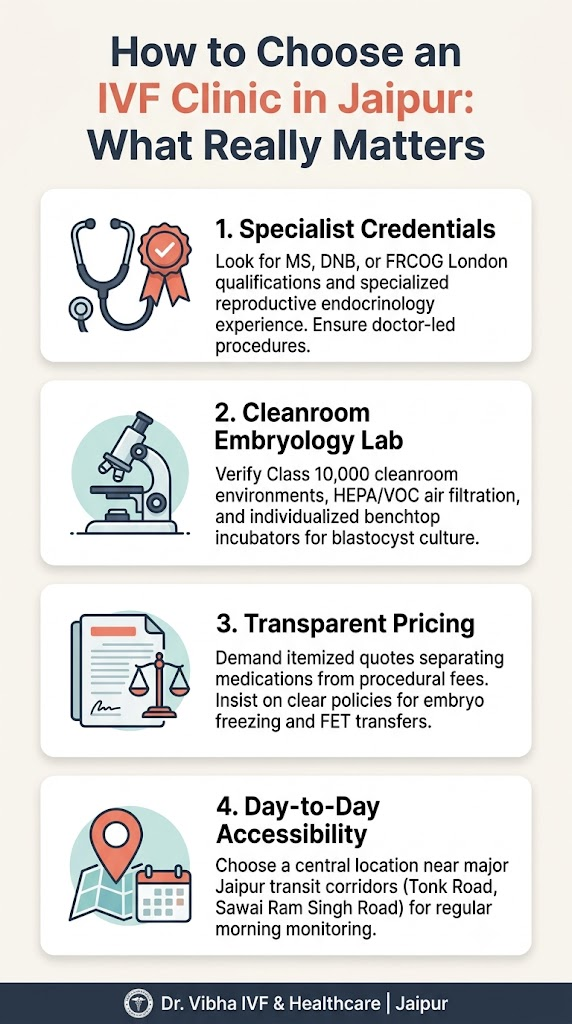
- Specialist Qualifications: Confirm your fertility doctor holds advanced credentials in obstetrics, gynecology, and reproductive medicine (such as MS, DNB, or FRCOG London), along with dedicated clinical experience managing complex cases.
- Laboratory Cleanroom Standards: Embryos are sensitive to air purity, temperature shifts, and volatile organic compounds. Ask whether the embryology facility uses Class 10,000 cleanroom environments, HEPA air filtration, and modern triple-gas benchtop incubators.
- Transparent Clinical Communication: Ethical clinics provide realistic expectations tailored to your age and ovarian reserve. Be cautious of marketing claims promising 100% success, which do not reflect standard clinical practice.
- Convenient Central Location: An IVF cycle involves regular morning ultrasound appointments. Choosing a centrally located clinic near major Jaipur transit corridors, such as Sawai Ram Singh Road, Tonk Road, and Narayan Singh Circle, simplifies your daily visits.
Frequently Asked Questions
What is the average IVF cost in Jaipur?
A complete IVF cycle in Jaipur generally ranges from ₹1,50,000 to ₹2,50,000. While promotional procedural packages range from ₹80,000 to ₹1,50,000, necessary additions like gonadotropin stimulation injections (₹40,000 to ₹80,000), diagnostic tracking, and blastocyst culture bring total out-of-pocket expenses to the ₹1.5 to ₹2.5 lakh range.
How much does one IVF cycle cost in Jaipur?
One procedural cycle typically costs between ₹80,000 and ₹1,20,000 for egg retrieval, routine laboratory fertilization, and fresh embryo transfer. Including stimulation injections and monitoring scans, the total cost for a single complete attempt typically falls between ₹1,50,000 and ₹2,20,000.
Does the IVF cost include medicines?
No, the majority of advertised IVF package prices in Jaipur do not include hormonal medications. Injectable gonadotropins are prescribed based on a patient’s age, body mass index, and ovarian reserve (AMH). Medication costs range from ₹40,000 to over ₹80,000 per cycle and are billed based on actual pharmacy usage.
Is ICSI included in standard IVF packages?
In most clinics, Intracytoplasmic Sperm Injection (ICSI) is not included in base packages. Conventional IVF involves mixing eggs and sperm together in a culture dish. If male factor parameters require micro-injecting each mature egg individually, an additional laboratory fee of ₹15,000 to ₹30,000 is typically added.
How much does IVF with ICSI cost in Jaipur?
A full cycle of IVF combined with ICSI in Jaipur typically ranges from ₹1,65,000 to ₹2,80,000, including stimulation injections. The ICSI procedure itself adds ₹15,000 to ₹30,000 to the base cost to cover micromanipulation consumables and specialized embryology work.
What additional expenses can increase the cost of IVF?
Expenses that commonly increase baseline treatment costs include high-dose stimulation injections for low ovarian reserve, ICSI for male-factor indications, Day-5 blastocyst culture, embryo vitrification and annual storage, Frozen Embryo Transfer (FET) cycles, and preimplantation genetic testing (PGT-A).
How much does embryo freezing cost in Jaipur?
Embryo vitrification in Jaipur costs between ₹30,000 and ₹60,000. This fee covers flash freezing, cryoprotectant media, and the first 6 to 12 months of storage in liquid nitrogen tanks (-196°C). Ongoing annual maintenance fees typically range from ₹10,000 to ₹20,000.
How much does a frozen embryo transfer (FET) cost?
A Frozen Embryo Transfer (FET) in Jaipur costs between ₹40,000 and ₹60,000. This procedure includes hormonal preparation of the uterine lining, laboratory thawing of vitrified embryos, and catheter transfer. It is significantly less expensive than undergoing a repeat stimulation and retrieval cycle.
Does IVF cost increase with maternal age?
Yes, treatment costs often increase with age. Women over 35 generally have lower ovarian reserve, requiring higher doses of gonadotropin stimulation medications, which increases pharmacy expenses. In addition, older patients may need multiple attempts to obtain a healthy blastocyst or may benefit from PGT-A genetic screening.
Is IVF covered by health insurance in India?
Standard retail health insurance policies in India generally exclude IVF from base coverage. However, select insurers offer optional fertility riders with 24 to 36-month waiting periods and sub-limits of ₹1 to ₹2 lakh. Some corporate group policies also provide partial reimbursement benefits.
How many IVF cycles might a patient need?
The number of cycles needed depends on age, egg reserve, sperm health, and underlying diagnoses. Many couples achieve success across 1 to 3 embryo transfers. Freezing surplus embryos from an initial retrieval allows subsequent transfers to be performed via FET without repeating the full stimulation process.
Is a cheaper IVF package always better?
A lower package price is not necessarily better if the clinic unbundles essential services, uses older urinary hormones instead of recombinant alternatives, or lacks advanced cleanroom laboratory infrastructure. If lower laboratory standards lead to failed cycles, the cumulative cost of repeat treatments can exceed that of choosing an accredited clinic initially.
How do I compare IVF clinics in Jaipur?
Compare fertility clinics by reviewing specialist credentials (such as MS or FRCOG qualifications), laboratory standards (HEPA filtration, benchtop incubators), pricing transparency (itemized written quotes), and accessible clinic locations for morning monitoring scans.
What should I ask before choosing an IVF package?
Ask whether the quoted package includes stimulation injections, anesthesia, ICSI, blastocyst incubation, embryo freezing, and storage. Clarify what fees apply if a fresh transfer is cancelled due to OHSS, and request the exact cost of a subsequent frozen transfer.
Can I get an IVF cost estimate before starting treatment?
Yes, reputable fertility centers provide an itemized financial estimate following your initial consultation and diagnostic workup. Once your specialist evaluates your ovarian reserve, medical history, and semen parameters, an itemized treatment and cost plan can be prepared.
Plan Your Fertility Journey with Dr. Vibha IVF in Jaipur
Planning fertility care is an important personal and financial decision. At Dr. Vibha IVF & Healthcare, we believe transparent communication and personalized medical care are essential to a supportive patient experience.
- Clinical Consultation: Meet with Dr. Vibha Kailash Garg (MS, FRCOG London) for an in-depth review of your medical history, diagnostic findings, and personalized treatment options.
- Central Jaipur Location: Conveniently situated at Dr. Garg Tower, Sawai Ram Singh Road / Tonk Road, Jaipur, accessible from Narayan Singh Circle, Rambagh, and JLN Marg.
- Clear Financial Planning: Receive an itemized treatment estimate detailing procedural steps, medication requirements, and available zero-percent interest EMI options before beginning your cycle.
Connect with our care team: Visit our central Jaipur clinic or schedule an initial consultation through drvibhaivf.com to take the next step in your treatment journey.
This is for informational purposes only. For medical advice or diagnosis, consult a professional.